
Payments for FX and CFD Brokers: A Provider Checklist
An FX or CFD broker needs a payment provider that can take card deposits from many countries, route around declines, and support client cash-outs that match how client funds are handled (a cash-out here is a client taking money out of the broker's platform). The right provider is the one whose acquirers will underwrite a regulated trading business and that can show how deposits, cash-outs and disputes work in practice.
What will an acquirer ask a broker for?
- Your regulatory licence and the entity that holds it.
- The client-onboarding and identity-verification process.
- Which countries you accept clients from, and which you block.
- How client funds are held and returned.
- Expected deposit volume, average ticket and chargeback history.
- The jurisdictions where your licence permits retail FX and CFD offers; retail CFDs are restricted or banned in some countries.
Present the business exactly as it is. Describing a trading platform as a different kind of business is a fast route to termination and held funds.
Provider checklist
- Licensing fit: does the acquirer accept your licence and jurisdiction?
- Country coverage: a written list of accepted and blocked countries.
- Deposit routing: rules by issuing country, card type, currency and amount.
- Declines: readable decline reasons and a defined retry and cascade policy.
- Client cash-outs: method, timing and any "return to source" requirement.
- Settlement: schedule, reserve terms and fees in writing.
- Disputes: alerts, evidence process and ratio thresholds.
- Integration: signed API, webhooks, sandbox and reconciliation data.
Why does deposit and cash-out symmetry matter?
Many compliance programmes expect funds to return by the same route they arrived. Check whether your provider supports refunds or cash-outs back to the originating card, and what happens when that is not possible. Decide this before launch, because it shapes client support and reconciliation.
How does cascading help a broker?
Cross-border card deposits fail for reasons that vary by issuer. A gateway with several approved routes can retry a deposit that failed for a technical or soft-decline reason on another permitted route. Hard declines (for example a lost or stolen card, an expired card or insufficient funds) and suspected fraud should not be retried. This recovers legitimate deposits and reduces dependence on one acquirer, but only across routes that have approved your business.
What about client verification?
Payment controls and onboarding checks should agree with each other. Ask how provider rules interact with your own KYC, and whether verification status can feed routing or limits through the API.
Where does EPaySe fit?
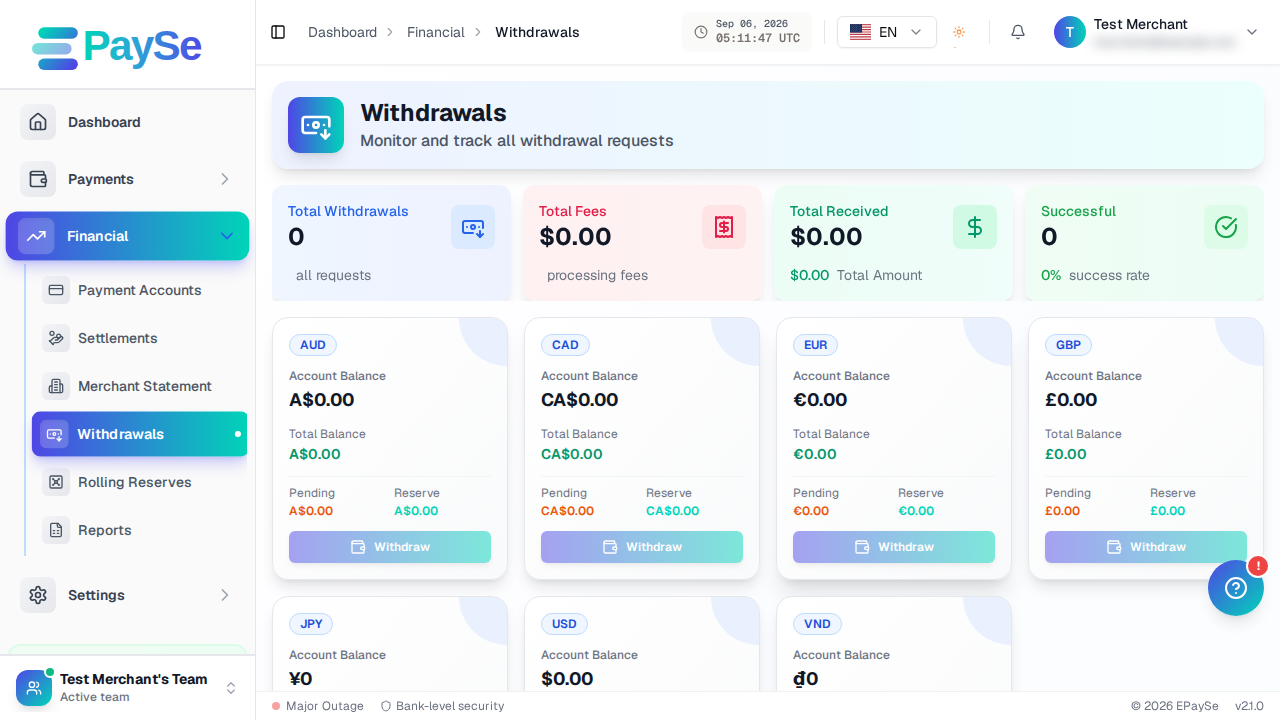
EPaySe is a payment gateway offering multi-PSP routing, rule-based fraud prevention and a signed REST API with webhooks and a sandbox, covering cards and local payment methods. Merchants are reviewed case by case. To discuss a broker's specific case, contact the team. See also what a high-risk gateway is. EPaySe does not currently offer automatic payouts to clients. Merchants withdraw their own settled balance, which is a separate process. Ask the team about plans for payouts.
FAQ
Do FX and CFD brokers always need a high-risk provider? Often, because acquirers treat the model as higher risk. It depends on the acquirer's assessment.
Can I use cards for cash-outs? Sometimes, depending on the route and rules. Confirm before you design the flow.
Is one acquirer enough? One acquirer works, but a technical outage stops deposits. Extra routes add resilience only for traffic each acquirer has approved; they do not protect against a termination for cause.
What should I never do? Misdescribe the business to an acquirer. It leads to termination.
Related Articles
Accepting Payments for AI Companion and AI Image Apps: What Acquirers Ask For
Some acquirers consider AI companion and AI image apps for card payments, case by case, when lawful, consent-based and age-verified. Here is what they ask for.
Payment Gateway for iGaming: What to Evaluate Before You Integrate
A payment gateway for iGaming is a routing and risk layer for deposits and player cash-outs. Here is what to evaluate before you integrate.
How to Create a Payment Link
How to create, share, and cancel a payment link from your EPaySe merchant dashboard.
How to Withdraw Funds
How to request a withdrawal from your EPaySe merchant balance, from adding a payout account to tracking the request's status.