
Payment Gateway for iGaming: What to Evaluate Before You Integrate
A payment gateway for iGaming is a routing and risk layer that lets a licensed operator take deposits and send player cash-outs through one or more acquirers, with controls for the chargebacks, geographic limits and cash-out rules that online gaming brings. In this article a cash-out is a player taking money out of the operator's platform. Choosing a gateway is mostly about evidence and architecture, not logos, so evaluate these areas before you integrate.
Which licences and documents will be asked for?
Acquirers underwrite gaming businesses on proof of lawful operation. Prepare:
- Your gaming licence and the jurisdictions it covers.
- Company registration and beneficial-ownership details.
- Responsible-gaming and customer-verification procedures.
- A clear list of the countries you accept players from.
Do not guess which markets a provider accepts. Ask for the answer per country, in writing.
How should geography and card routing work?
Gaming traffic is rarely uniform. A good gateway lets you set rules by issuing country, card type, currency and amount, and send each group to the route most likely to approve it. Sanctioned and restricted territories must be blocked at the gateway, regardless of what any route would accept.
What happens when a route declines?
Ask how the provider retries. Cascading to a second permitted route can recover legitimate deposits, but it must be transparent, must follow each acquirer's rules, and should not retry hard declines (for example a lost or stolen card, an expired card or insufficient funds) or suspected fraud. Ask for decline reasons you can read in your own dashboard and API responses.
How are deposits, cash-outs and refunds reconciled?
Gaming has two money flows. Deposits come in by card or local payment method. Cash-outs go out, and they often follow different rules than deposits. Check:
- Whether cash-outs to cards are supported on the route you will use, or need another method.
- How refunds and reversals are matched to the original deposit.
- What settlement timing and reserve terms apply, in writing.
- Whether webhooks and an API let your system reconcile each event automatically.
How are chargebacks handled?
Look for fraud rules you can tune, alerts you can act on early, and clear evidence-submission steps for disputes. Ask what ratio thresholds the acquirers apply and what happens if you approach them. A provider that cannot describe this is not ready for gaming volume.
Why does acquirer redundancy matter?
One acquirer relationship is a single point of failure for technical outages and capacity limits. Additional routes help only for traffic each acquirer has approved. A termination for cause (for example a MATCH listing) usually affects every route, so redundancy is not a substitute for staying within each acquirer's rules.
Questions to ask any provider
- Which acquirers and licences stand behind the routes, and who underwrites me (some providers disclose acquirers only under NDA during onboarding)?
- Is approval case by case, and what is the realistic document list?
- How are player cash-outs handled, and are there restrictions by country?
- What is the API like: signed requests, webhooks, sandbox?
- What are reserve, settlement and termination terms?
Where does EPaySe fit?
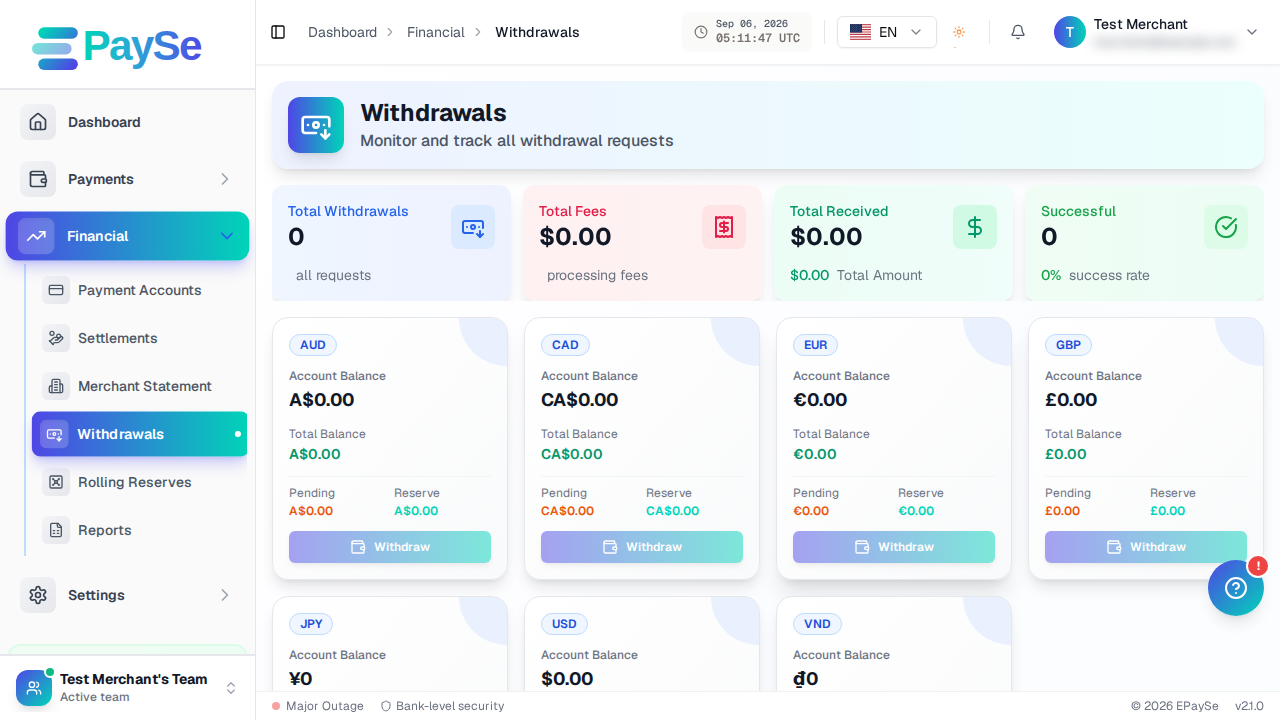
EPaySe is a payment gateway with multi-PSP routing, rule-based fraud prevention and a signed REST API with webhooks and a sandbox, covering cards and local payment methods. Merchants are reviewed case by case. Operators who want to discuss a specific case can contact the team; technical details are in the developer overview. EPaySe does not currently offer automatic payouts to players. Merchants withdraw their own settled balance, which is a separate process. Ask the team about plans for payouts.
FAQ
Does a gateway guarantee my gaming business will be approved? No. Acquirers decide, based on your licence, documents and processing profile.
Can I accept players from any country? Only where online gambling is lawful for that player's jurisdiction, your licence covers it, and the acquirer has approved it. Restricted territories must be blocked.
Are cash-outs the same as refunds? No. Cash-outs to players follow separate rules and may need a different method.
Is redundancy worth it? For technical outages, yes, if each additional route is genuinely approved for your traffic. It does not protect against a termination for cause.
Related Articles
Accepting Payments for AI Companion and AI Image Apps: What Acquirers Ask For
Some acquirers consider AI companion and AI image apps for card payments, case by case, when lawful, consent-based and age-verified. Here is what they ask for.
Payments for FX and CFD Brokers: A Provider Checklist
What an FX or CFD broker should confirm with a payment provider: licensing fit, country coverage, deposit routing, cash-outs, settlement and disputes.
How to Create a Payment Link
How to create, share, and cancel a payment link from your EPaySe merchant dashboard.
How to Withdraw Funds
How to request a withdrawal from your EPaySe merchant balance, from adding a payout account to tracking the request's status.